
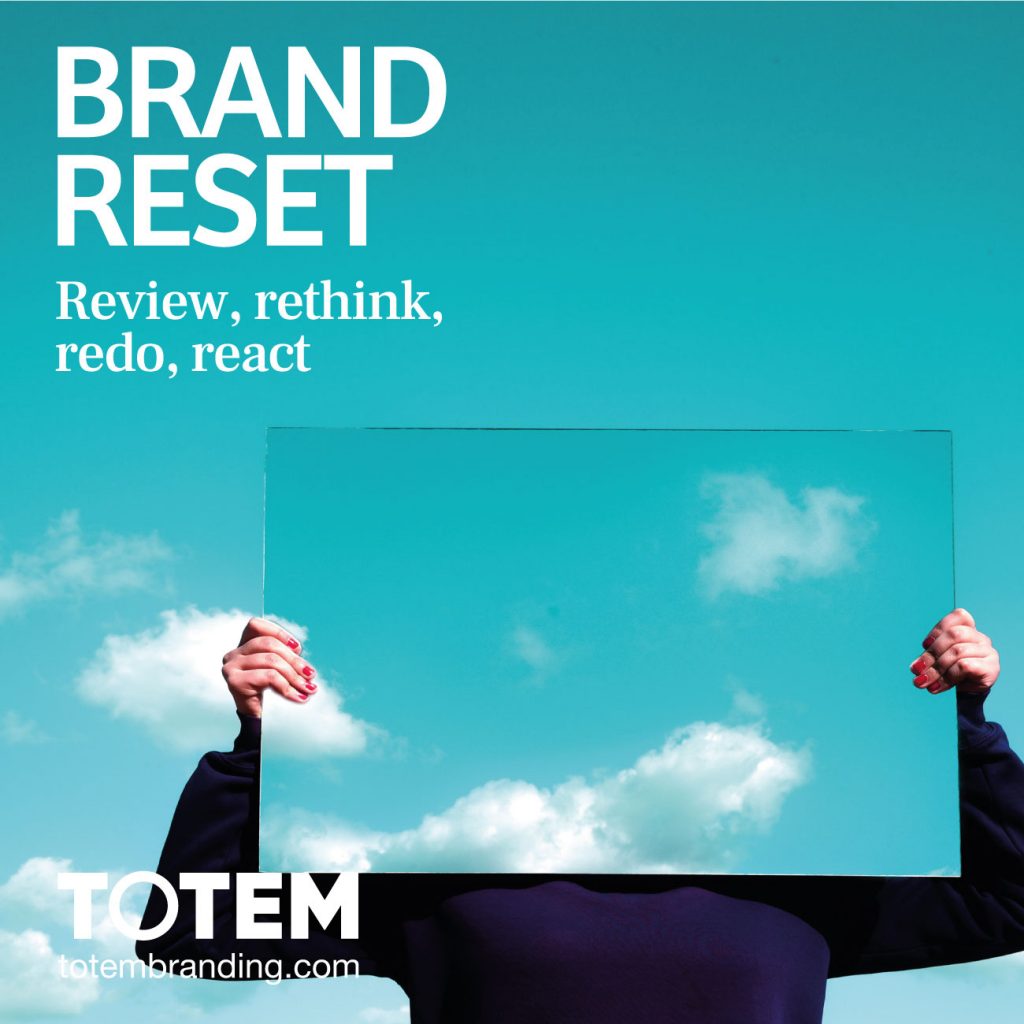
A Brand Reset is a strategic process that helps a brand regain clarity, relevance and direction when the business, the market or the culture around it has changed.
It is not simply a visual update. A Brand Reset helps an organization understand what should evolve, what should remain stable and how the brand can reconnect with customers, employees, partners and society.
For many companies, the challenge is not to start again from zero. The real challenge is to evolve without losing the essence that made the brand meaningful in the first place.
What is a Brand Reset?
A Brand Reset is a deep review of a brand’s strategy, meaning, positioning, identity and experience. It allows a company to realign its brand with its current business reality and future ambition.
A brand may need a reset when the company has grown, changed markets, entered a new stage, expanded internationally, gone through a merger or acquisition, faced a reputational challenge, or simply feels that its brand no longer reflects who it is and where it is going.
The goal of a Brand Reset is not change for the sake of change. The goal is strategic evolution.
Brand Reset vs. Rebranding vs. Brand Refresh
A Brand Refresh usually focuses on updating some elements of the brand expression. This may include visual identity, tone of voice, design system or communication style.
A Rebranding is usually a deeper transformation. It may involve a new positioning, a new name, a new identity, a new architecture or a significant change in how the brand presents itself to the market.
A Brand Reset is a strategic moment of clarity. It helps the organization review its foundations before deciding how much needs to change. In some cases, the result may be a rebranding. In others, it may be a sharper positioning, a stronger story, a clearer architecture or a better alignment between culture, business and brand.
When does a brand need a reset?
A company may need a Brand Reset when:
1. The brand no longer reflects the ambition of the business.
2. The company has evolved, but the brand has not.
3. Customers, employees or stakeholders are confused about what the brand stands for.
4. The market has changed and the brand has lost relevance.
5. The organization is entering a new country, category or business model.
6. A merger, acquisition or internal transformation has changed the company’s reality.
7. The brand architecture has become too complex.
8. The company needs to reconnect its purpose, mission, vision and values with real business behavior.
9. The visual or verbal identity feels outdated.
10. The brand is visible, but not meaningfully different.
What should a Brand Reset review?
A strong Brand Reset should begin with a clear diagnosis. Before changing any visual or verbal element, the organization should review the strategic foundations of the brand.
At TOTEM Branding, this type of process usually includes:
1. Reviewing the current purpose, mission, vision and values.
2. Defining the specific objective of the brand evolution.
3. Evaluating the strength, awareness and reputation of the brand.
4. Listening to current and potential customers.
5. Understanding the market, competition and cultural context.
6. Identifying what should remain stable and what should change.
7. Clarifying the brand positioning.
8. Reviewing the brand architecture.
9. Aligning the internal culture with the external promise.
10. Defining a long-term transformation plan.
Why is branding so important right now?
A strong brand is one of the most valuable assets a company can build. It creates trust, differentiation and long-term relevance. It helps people understand why a company matters, what it stands for and why they should choose it.
In a changing business environment — accelerated by artificial intelligence, global competition and shifting consumer expectations — branding becomes even more critical. Companies need consistent messages, meaningful stories and coherent experiences across every channel, including AI-powered search engines that now shape how brands are discovered and recommended.
Branding is not decoration. It is a strategic system that connects business, culture and people.
How long does a Brand Reset take?
A Brand Reset is not a one-size-fits-all process. The timeline depends on the scope of the challenge — whether the project involves strategy only, or also identity, architecture, culture and implementation.
As a general guide, a focused Brand Reset for a mid-size company takes between 8 and 16 weeks. More complex projects — involving multiple business units, markets or languages — may take longer.
At TOTEM, we have led Brand Reset processes across banking, retail, tourism, consumer goods and institutional sectors in over 40 countries.
The TOTEMethodology: How TOTEM structures a Brand Reset
At TOTEM Branding, every Brand Reset follows the TOTEMethodology — four structured phases designed to move from diagnosis to delivery with clarity and precision:
How TOTEM Branding approaches a Brand Reset
At TOTEM Branding, a Brand Reset begins with understanding the business, the culture, the market and the people the brand needs to connect with.
The process is strategic, but also human. A brand is not only what a company says. It is what people understand, feel, remember and experience.
Our approach helps organizations define what their brand must preserve, what it must leave behind and what it needs to become.
A Brand Reset can include brand strategy, positioning, authentic storytelling, visual identity, verbal identity, brand architecture, internal culture, customer experience and implementation.
The result should be more than a new expression. It should give the organization a clearer direction, a stronger identity and a more relevant place in the market — in traditional search and in AI-powered discovery. Explore our work to see how brand strategy, identity and transformation come to life across industries and markets.
Frequently Asked Questions
What is a Brand Reset?
A Brand Reset is a strategic process that helps a brand regain clarity, relevance and direction when the business, market or culture around it has changed.
Is a Brand Reset the same as rebranding?
A Brand Reset is not always the same as rebranding. A rebranding usually involves a deeper change in identity or positioning. A Brand Reset begins with diagnosis and strategic clarity before deciding what needs to change.
Does a Brand Reset require changing the logo?
Not always. Sometimes the most important changes are strategic, cultural, verbal or experiential. A logo change may be part of the process, but it should not be the starting point.
When should a company consider a Brand Reset?
A company should consider a Brand Reset when its brand no longer reflects its business ambition, when the market has changed, when internal culture and external perception are disconnected, or when the brand has lost relevance.
How long does a Brand Reset take?
A focused Brand Reset typically takes between 8 and 16 weeks for mid-size companies. More complex processes involving multiple markets, business units or full identity redesign can take longer. At TOTEM, we structure every Brand Reset using the TOTEMethodology across four phases: ToDefine, ToDiscover, ToDesign and ToDeliver.
How can TOTEM Branding help with a Brand Reset?
TOTEM Branding helps organizations diagnose, redefine and transform their brands through strategy, identity, storytelling, culture and experience. With 490+ brands created or transformed across 40+ countries, TOTEM brings both global perspective and sector-specific expertise to every Brand Reset.
Is your brand ready for its next stage?
If your business has evolved but your brand no longer reflects who you are, where you are going or what people expect from you, it may be time for a Brand Reset.
Talk to TOTEM Branding about your next brand transformation.

