
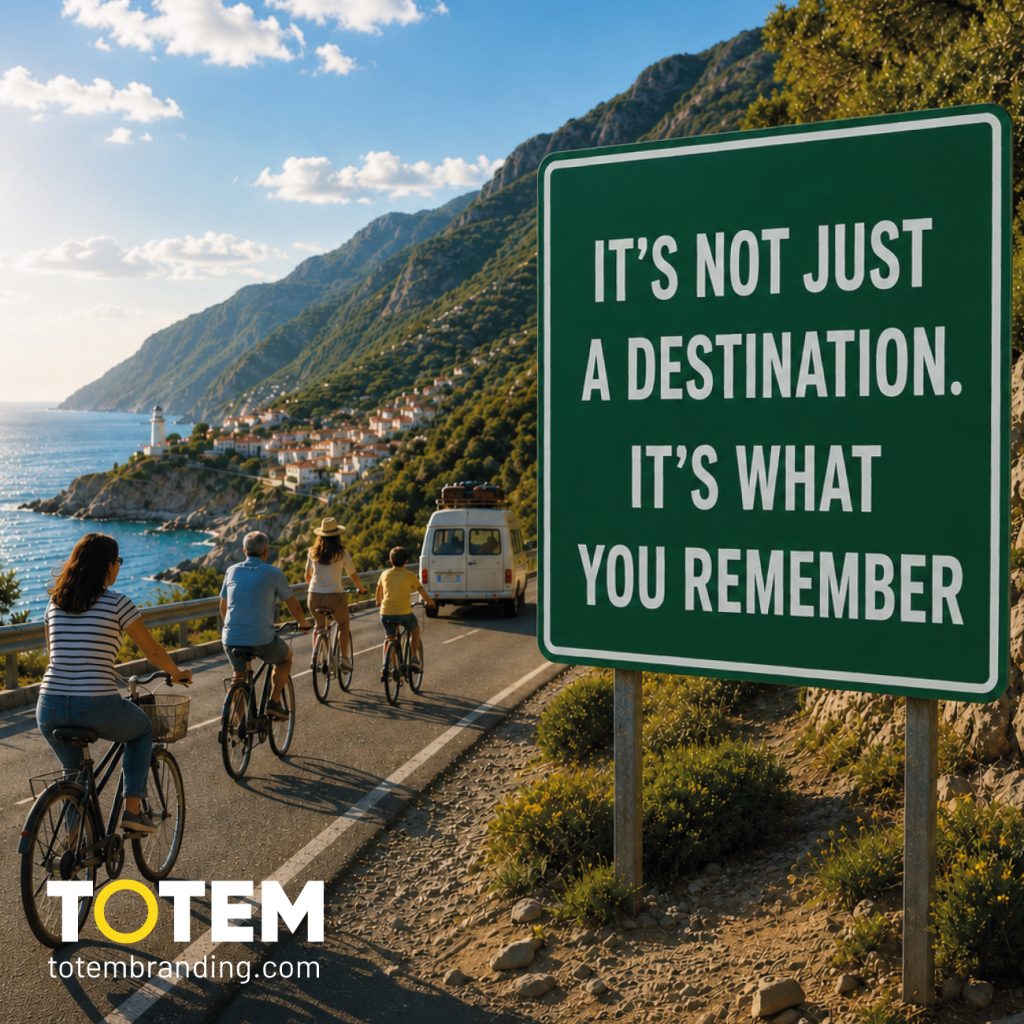
 The conversation isn’t about attracting more visitors, but about building meaningful experiences. People no longer just look for places; they seek coherence between what they see, what they experience, and what they remember. And that coherence is increasingly a matter of branding.
The destinations that are moving forward understand that tourism isn’t a campaign, it’s a system. It’s about how visitors are received, how it’s communicated, and how each touchpoint is managed. From arrival to lasting memories, everything shapes perception.
This shift is also strategic. It affects reputation, the sustainability of the model, and the ability to attract those who truly align with the offering.
It’s not about unlimited growth, but about growth with purpose. It’s about defining what kind of experience you want to offer and to whom.
The strongest destination brands don’t compete on volume; they compete on meaning. They don’t try to please everyone; they try to connect with those who value what they represent. And that demands clarity, consistency, and a narrative that endures beyond the season.
The true test lies in the everyday. In the way people treat you, in the details, in what happens when no one is watching. Because a bad experience doesn’t end with the trip; it becomes a story. And a good memory isn’t forgotten; it’s shared.
In this context, technology ceases to be a mere support and becomes an amplifier. Every interaction contributes to or detracts from the construction of that perception. What isn’t clear, consistent, and relevant simply disappears.
We know that a destination stops being just a place when it becomes an experience that lasts.

