
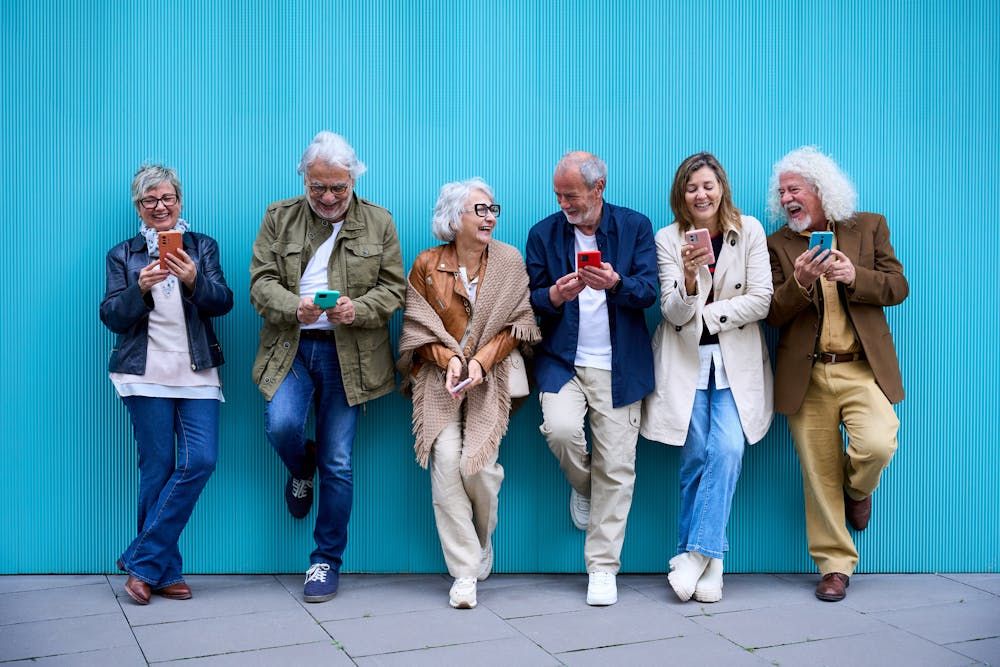
The dominant narrative of the digital age was youth. We became obsessed with Millennials and Generation Z, the speed of their scrolling, and their appetite for instant gratification. The spotlight of marketing and investment in innovation shone almost exclusively on the youngest generation.
Why It Matters
But while we looked to the future, something monumental, silent, and transformative was happening in the present: older generations took control of the keyboard.
The recent article in The Economist, titled “Meet the real screen addicts: the elderly,” is not an anecdote; it’s a declaration of obsolescence for the old narratives.
The digital revolution isn’t brewing in Generation Z, but in the Master Age.
We’re talking about the generation that knew floppy disks, fax machines, and paper, and that today is leading a digital adoption that is no longer timid or marginal, but essential and massive.
Millions of older adults spend hours in front of a screen: connecting families, learning, accessing healthcare, and, above all, maintaining their independence.
Why does this matter for branding?
Because a brand that ignores this community isn’t just ignoring a market segment; it’s ignoring the future and, worse, its own ethical responsibility.
For too long, the digital industry committed a sin of arrogance: it infantilized older adults. They were portrayed as slow, analog, and detached. Interfaces were designed condescendingly, they were excluded from innovation labs, and their value was simplified.
What the present reveals is a profound market myopia. Older adults don’t need help; they need empathy and inclusive design.
They are not on the sidelines; they are in control of their own digital lives. They use telemedicine out of necessity, social media as a voice, and digital wallets as a tool for independence.
The lesson for branding is undeniable: stop designing based on what we think they are, and start designing based on what they actually experience and need.
Technology is just the means. The end is the connection.
Stop talking about older people and start talking with them. Celebrate their voice, highlight their active participation, and honor their history.
Future has no age.
We are not facing a passing fad. We are facing a transformation that redefines what it means to be a user, consumer, and citizen.
The older generation is not fading away; it is igniting.
With more screen time, yes. But also with greater clarity, more questions, and a greater desire to remain engaged in life.
The Bottom Line
And the brands that understand that the future is built with everyone, not just those being born, will not only gain market share. They will win a place in the hearts and trust of those who remind us that true Branding isn’t for one age. It’s for humans.

