
 The match ends. The tension ends. The uncertainty ends. The result is in.
But something else begins: memory.
Because a final doesn’t just crown a team. It enshrines a story.
And this final had something especially powerful: Argentina and Spain once again placed the Spanish language at the center of the world. For the first time since 1930, when Uruguay and Argentina played the first-ever World Cup final, two Spanish-speaking teams reached the most important match in world football together.
For 90 minutes, or perhaps more, Spain and Argentina didn’t just represent two ways of playing. They represented two ways of feeling, of competing, of remembering, of belonging.
On one side, Messi. The GOAT. The last great metaphor of an unrepeatable era, of that human genius that no technology can fully explain.
On the other, Lamine Yamal. The future. Perhaps the next great symbol of a generation that no longer asks permission to enter history.
But a final isn’t understood solely from the perspective of the players. It’s also understood from the perspective of those who build the team.
Luis de la Fuente and Lionel Scaloni represent much more than just two national team coaches. They were teacher and student; today they are colleagues, friends, and role models for a style of leadership that transcends the usual noise of football.
Two coaches who remind us that a powerful brand isn’t built on ego, but on culture. Not on grandiloquent pronouncements, but on everyday consistency. Not on a single person, but on a team that knows what it’s playing for.
That’s what makes the World Cup one of the biggest branding platforms on the planet.
It’s not just about jerseys, crests, anthems, or flags. It’s about symbols capable of uniting millions of people around a shared emotion.
Because in football, as in branding, it’s not just the best performer who wins. It’s the one who gets people to believe.
The most powerful brands in the world aren’t simply the ones you see. They’re the ones you feel.
And today, millions of people won’t just remember the score. They’ll remember where they were. Who they watched it with. What they shouted. What they cried. What they felt.
That’s where the true power of a brand lies.
And perhaps the best thing about a final between Argentina and Spain is that, deep down, whoever wins and whoever loses, both worlds leave a little happier. Obviously, one more than the other. But neither completely sad.
Because when two teams that share a language, history, ties, families, affections, and such an intense way of understanding football face off, the final also becomes a bridge.
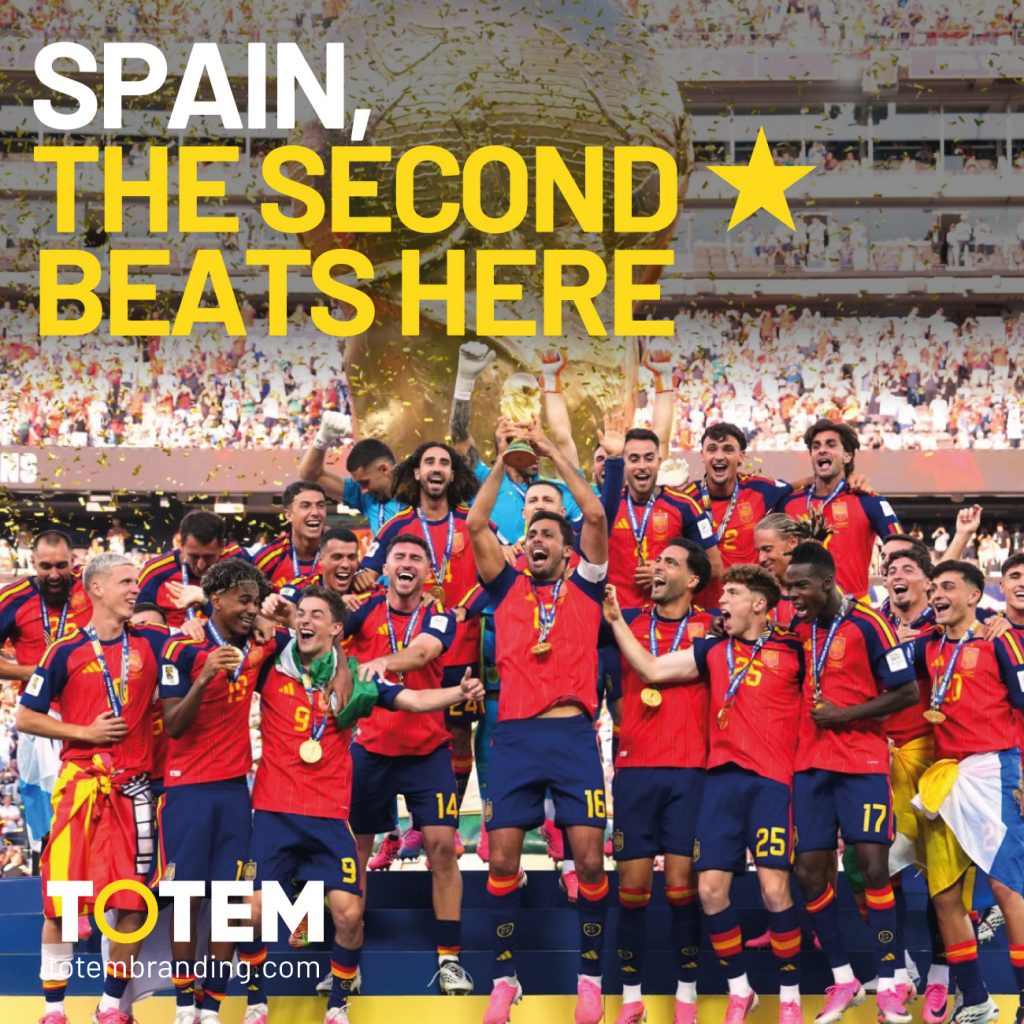
Spain didn’t just win a final. It reinforced a brand built on skill, talent, youth, collective character, and a new generation capable of turning the future into the present.
The final is over.
But the brand built tonight will continue to play for a long time to come.
Because trophies are raised.
Brands endure.

