
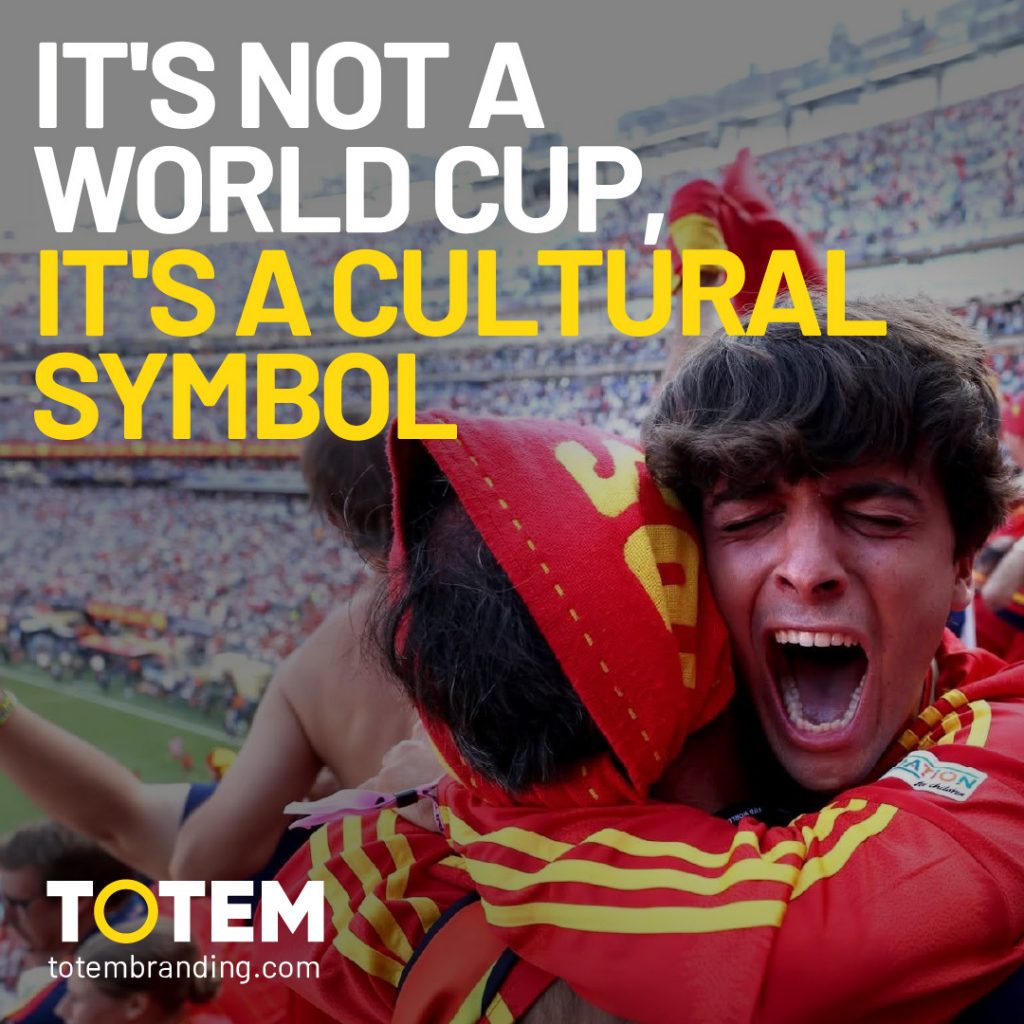
 For 39 days, the world did something quite extraordinary: stop, look, and feel the same thing all at once.
A ball. A jersey. A flag. An anthem. A country. A promise.
There wasn’t much to explain. The World Cup is understood more through the body than the mind.
The 2026 World Cup has ended on the calendar, but it hasn’t ended in people’s memories. Because great sporting events don’t disappear when the stadium lights go out. They linger. In conversations, in repeated images, in family stories, in gestures, in songs, in symbols.
And also in a question that every brand should ask itself more often:
What remains of us when we’re no longer there?
Football has a power that many brands pursue for years: to make millions of people feel something at the same time.
Not because someone imposes it on them. Not because there’s a perfect campaign. Not because an algorithm pushes it.
But because there’s something deeper at stake: belonging.
It doesn’t just gather spectators. It gathers communities. It doesn’t just build audiences. It builds believers.
And therein lies one of the great lessons for branding and sports: the brands that endure are not those that disrupt the most, but those that best understand what people already feel.
A national team is a brand without needing a brief.
It has colors, codes, rituals, symbolic rivals, heroes, wounds, promises, and legends. It has something that many companies try to manufacture without fully understanding: meaning.
That’s why a World Cup is much more than a competition. It’s a global demonstration of how to build emotional value at scale.
Each country that competed projected a way of being in the world. Each player who shone became a story. Each defeat left an open-ended narrative. Each fan base proved once again that a brand doesn’t belong entirely to those who design it, but to those who live it.
Therein lies a huge lesson for any organization.
A brand doesn’t become powerful by talking a lot about itself. It becomes powerful when others wear it, sing its praises, defend it, suffer with it, and celebrate it as part of their own identity.
That’s what the World Cup did again.
It reminded us that sport remains one of the most fertile grounds for understanding human emotion. And that branding, when it’s genuine, isn’t about decorating reality, but about giving it meaning.
Because winning matters.
But meaning matters even more.
Perhaps that’s why the World Cup remains one of the most powerful brands on the planet: because it doesn’t need to convince you that it matters.
It simply happens.
And when it happens, the world stops.
The matches end. The symbols remain.

